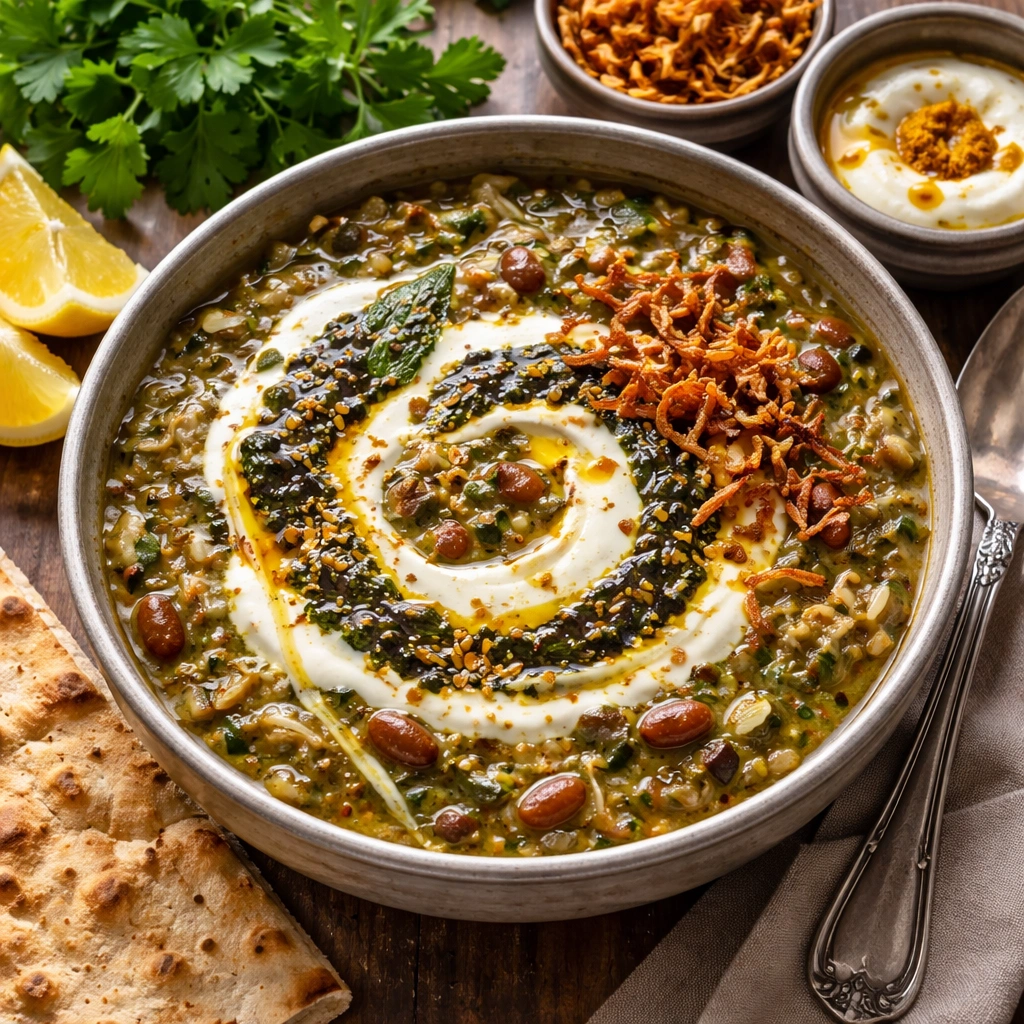

Most people think soup is just a side dish, but they are dead wrong. In Iran, Ash Reshteh is the main event and honestly, if you call it a soup to a local, they might give you a funny look.
It is a thick, chunky green stew that looks like a forest in a bowl. Some folks find the texture of the noodles and beans a bit much, but that is exactly where the soul of the dish hides.
The wildest part about this dish is that it actually dates back over a thousand years. It is tied to a crazy historical fact: the ancient Persians believed that eating these noodles helped you find your path in life.
History of Ash Reshteh:
The word Ash actually means soup, but it’s so central to the culture that the word for cook is Ashpaz, which literally means soup-maker.
Back in the day, the Reshteh or noodles represented the many paths of life. Eating them during the Persian New Year was like a ritual to help you pick the right direction for the coming months.
It started as a humble meal for peasants because it was cheap and filling. Now, it is the ultimate comfort food that you will find at every single major Iranian celebration or mountain hike.
What’s Inside?
The real magic comes from the greens like spinach, parsley, and cilantro, but the Reshteh noodles are the heavy hitters that make it thick.
You also have a mix of beans like chickpeas and lentils that give it that hearty, stay-with-you-all-day feel. It is basically a protein bomb that tastes like a herb garden.
But the absolute game-changer is the Kashk. It is a salty, fermented dairy sauce that smells a bit funky but adds a creamy, tangy kick that you cannot get anywhere else.
How Iranians actually eat?
You never just eat a plain bowl; the toppings are the best part. Locals go heavy on the fried onions, crispy garlic, and dried mint sizzled in hot oil.
There is a bit of an art to the swirl. You take your spoon and mix just enough of the Kashk into the dark green stew to create beautiful white streaks without losing the texture.
It is usually shared from a massive pot. Iranians love to serve this at outdoor picnics or during cold mountain treks because nothing warms your bones faster than a big bowl of Reshteh.