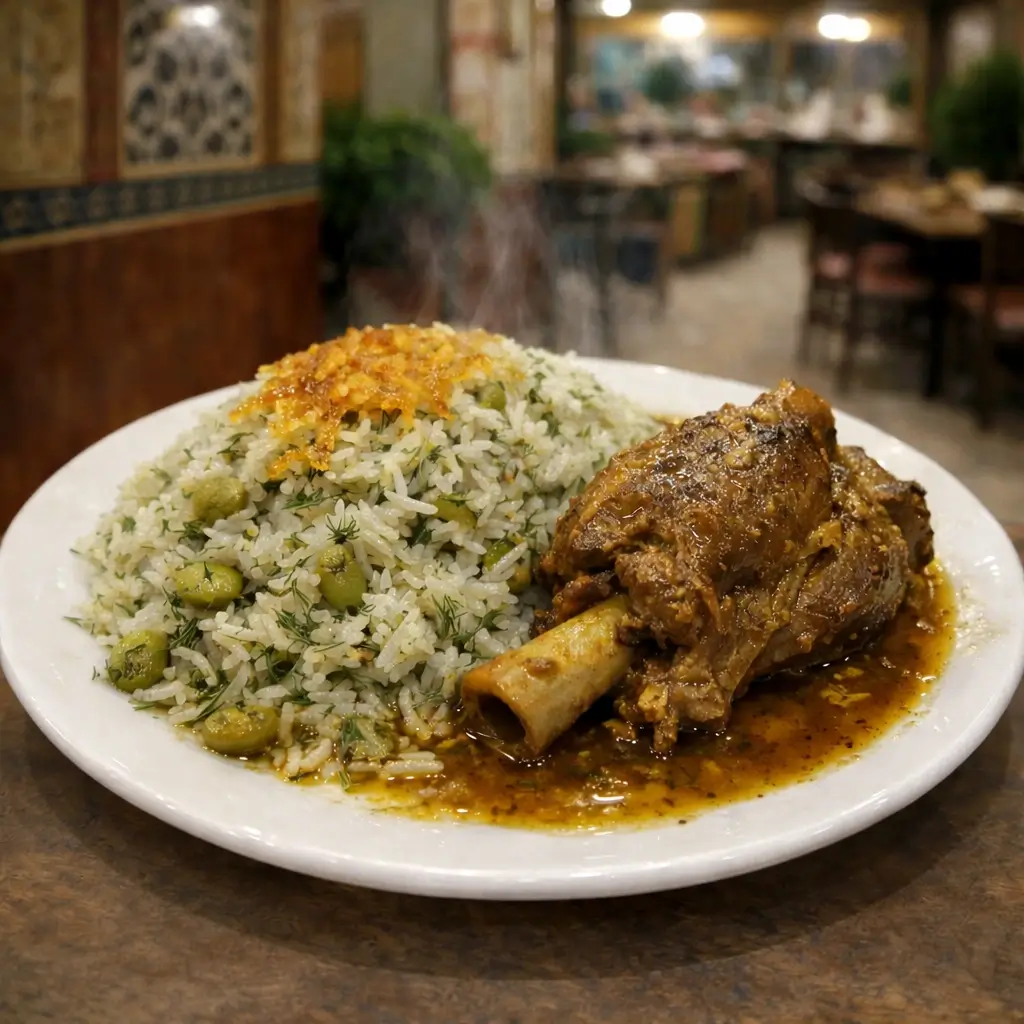

In the 1800s, the Iranian king Naser al-Din Shah was so obsessed with his food that his kitchen staff was larger than his actual army. He treated a good meal like a national security matter, and that’s the kind of energy that created Baghali Polo.
If you think a basic bowl of white rice is enough for a dinner party, you are doing it wrong. In Iran, if you don’t serve Baghali Polo ba Mahicheh at a wedding or a huge family blowout, you might as well have not invited anyone at all.
It is the ultimate “flex” dish because it takes forever to get right. You can’t just throw things in a pot and hope for the best; you have to treat the rice like it is a precious gem or you’ll end up with a mushy mess.
History of Baghali Polo:
Back in the day, the Safavid kings were the ones who really pushed this dish into the spotlight. They wanted something that looked like a garden on a plate, which is why the green herbs and beans are so important.
It started in the royal courts of Isfahan and Tehran before it hit the streets. It was never meant to be a quick Tuesday night dinner; it was always the “special occasion” king of the table for the wealthy.
Over time, it became the gold standard for Persian hospitality. Even today, if an Iranian mom makes this for you, it means she actually likes you because the prep work is a total nightmare.
What’s Inside?
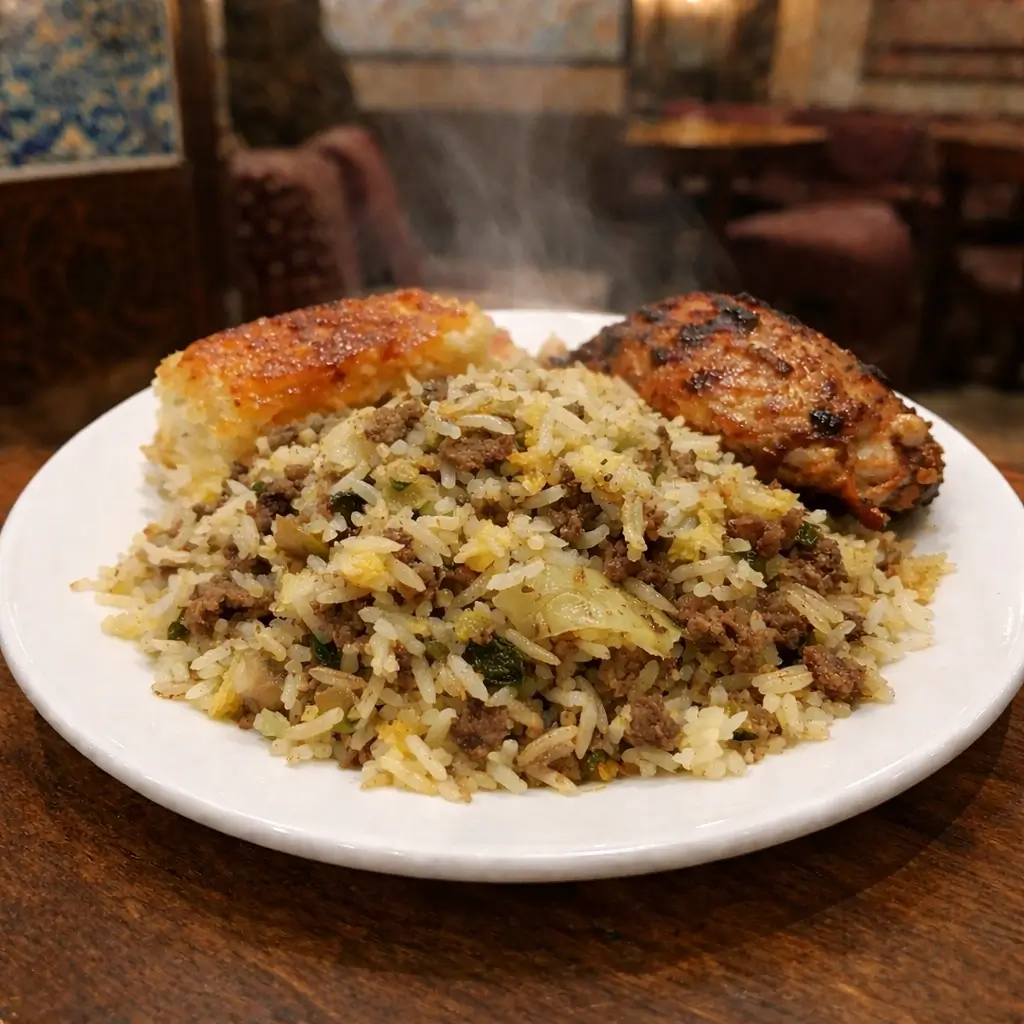
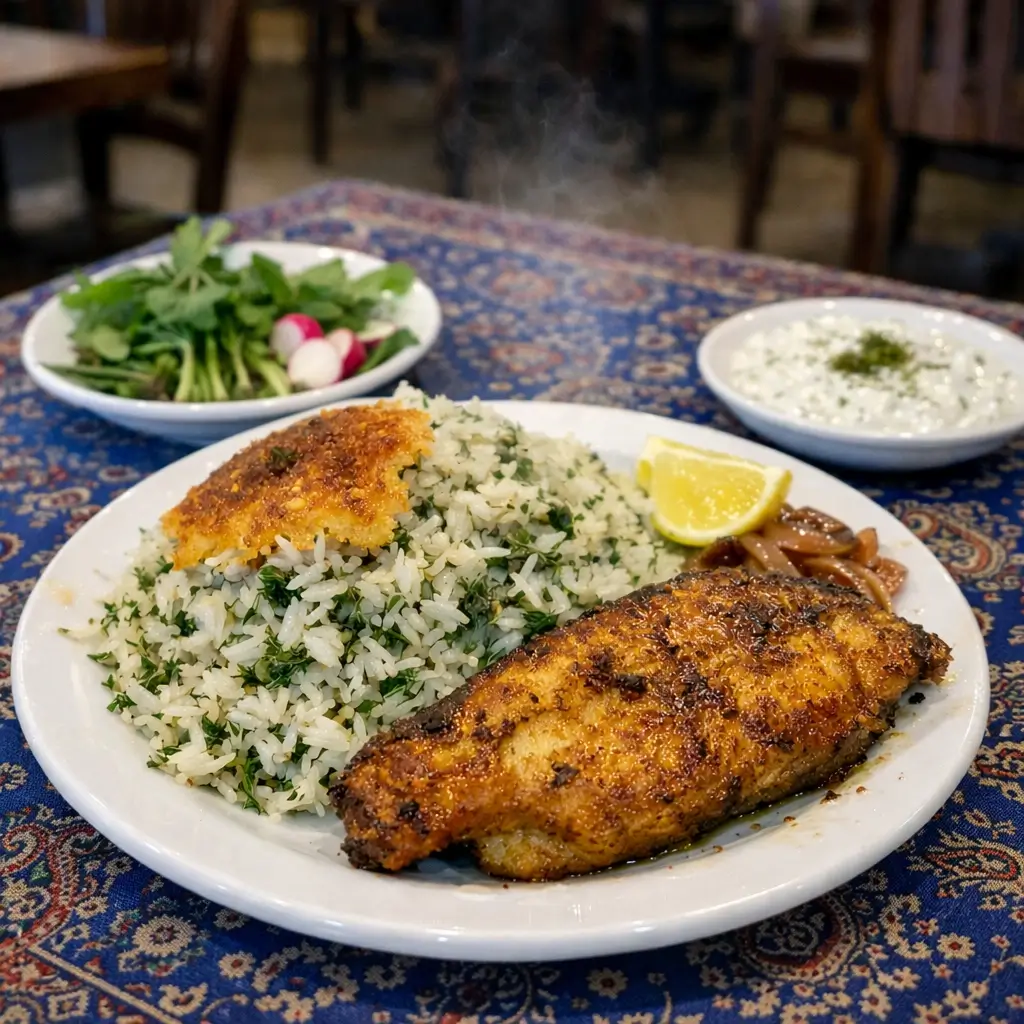
The soul of this dish is the fava beans and a mountain of fresh dill. You need so much dill that your kitchen will smell like a forest for three days straight, but that is the secret to the flavor.
Then you have the Mahicheh, which is a slow-cooked lamb shank. It has to be cooked until the meat literally falls off the bone if you even look at it too hard, usually with a hint of turmeric and onion.
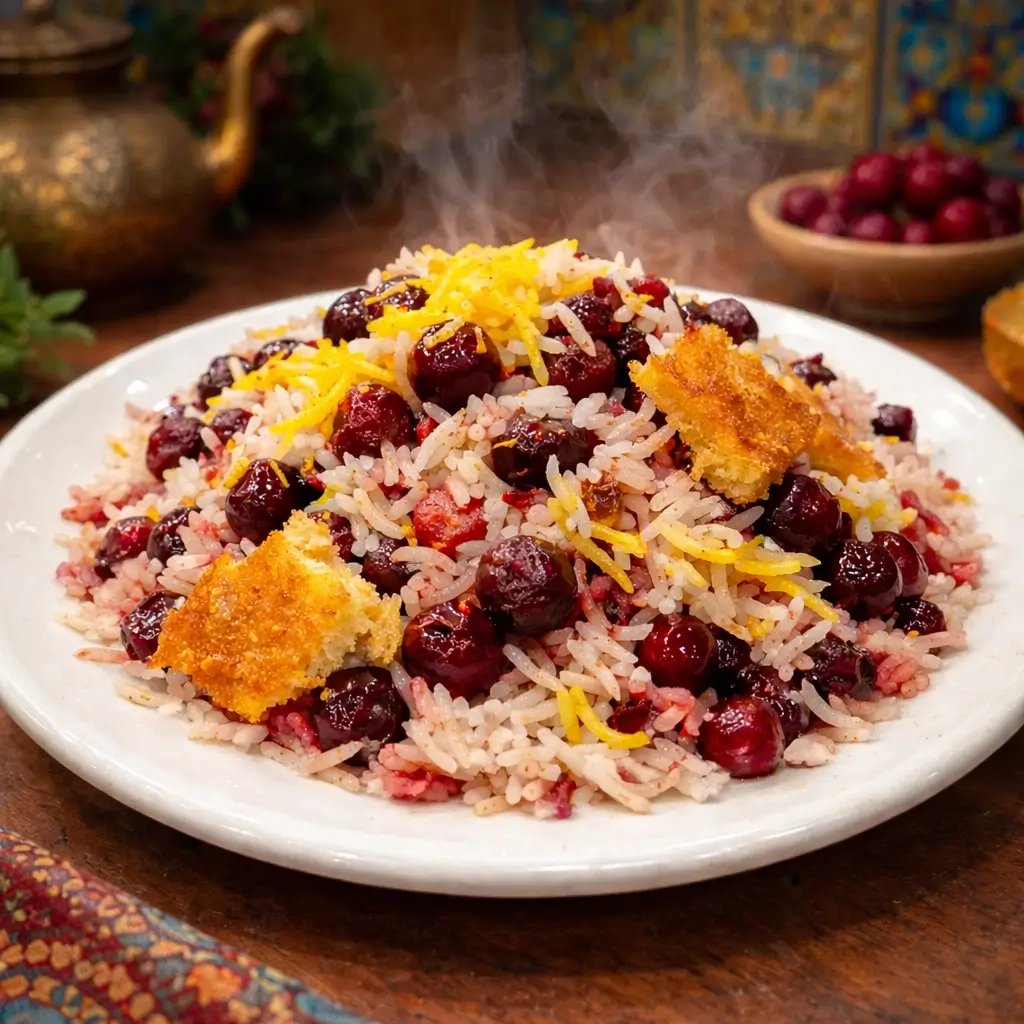
The real MVP is the Saffron. We use the expensive stuff to turn the top layer of rice a bright yellow. It adds that earthy, floral scent that makes the whole house feel expensive and fancy.
How Iranians actually eat?
Whatever you do, do not sleep on the Tahdig. That is the crunchy, fried layer of rice or potato at the bottom of the pot. People will literally fight their own cousins to get the biggest piece of it.
Locals usually pour the extra meat juice from the lamb shank over the green rice to make it moist. It is a heavy meal, so nobody is going for a run after this; you’re going straight to the sofa.
You’ve also got to have a side of Salad Shirazi (cucumbers and tomatoes) or some thick yogurt with shallots. The acidity from the salad cuts through the fat of the lamb and keeps you from passing out.