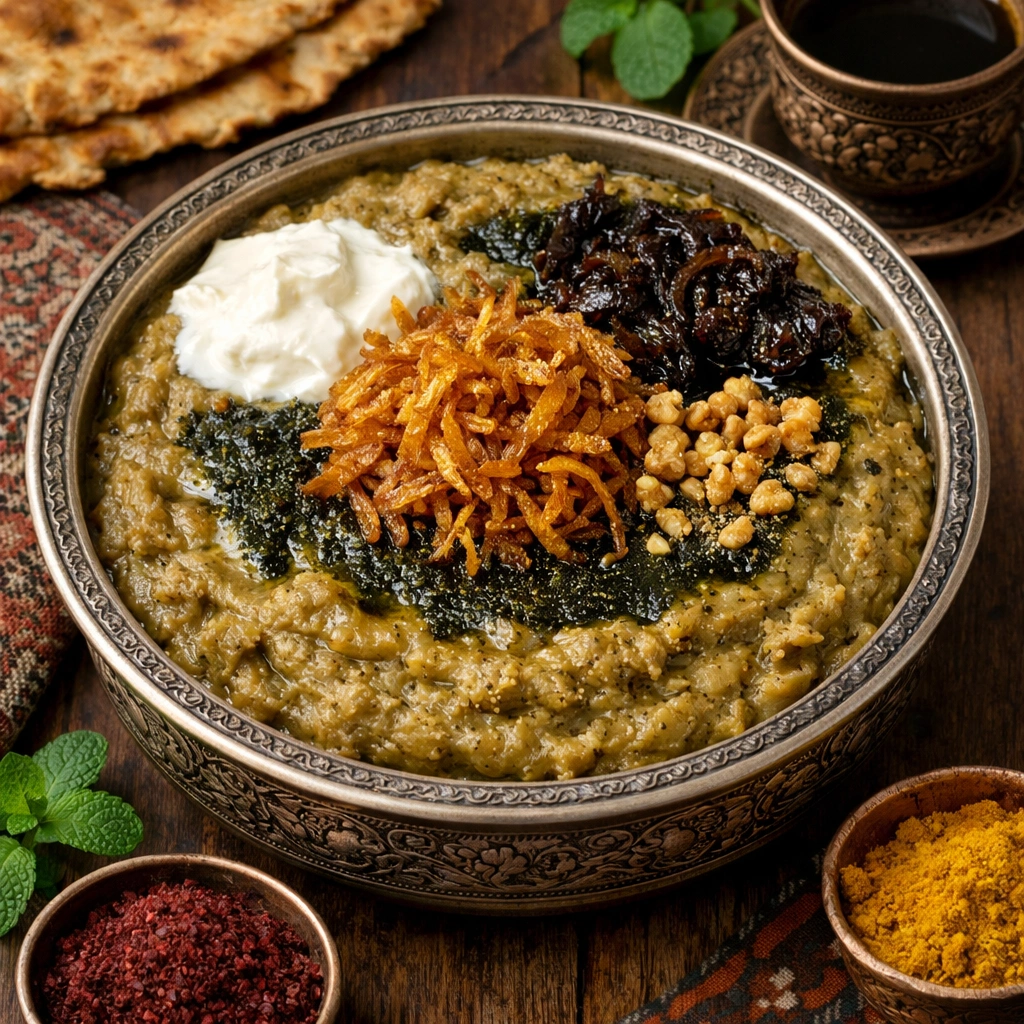

If you think eggplant is mushy and boring, you have been eating it wrong your entire life. Most people assume a dip made of eggplant and meat would look like a mess, but this dish is a masterpiece of texture.
It is honestly insulting to call Halim Bademjan just a dip because it is more like a savory, thick porridge. It takes hours of work to get that specific stretchy consistency that makes it famous in Iranian homes.
Did you know that in the 13th century, a famous cookbook writer named Al-Baghdadi described a similar dish that was basically considered food for royalty? It was never meant to be a quick snack.
History of Halim Bademjan:
This dish comes from the heart of Isfahan, a city known for doing things the long and patient way. The name is a bit of a trick because Halim usually means a wheat porridge, but there is no wheat here.
Back in the day, Persians started using the word Halim to describe any dish that was cooked so long the meat and vegetables totally dissolved into each other. It was a way to show off hospitality.
The goal was to create a meal so rich and filling that it could sustain a whole family of travelers. It has stayed a staple for parties and big gatherings because it feels like a warm hug.
What’s Inside?
The soul of this dish is definitely the Kashk, which is a fermented, salty yogurt whey that tastes like extra-strong goat cheese. It gives the dish a sour, funky kick you won’t find anywhere else.
Then you have the fried eggplants and the lamb. They get cooked down until they can be shredded and mashed together into a thick, elastic paste that sticks to your spoon.
The real magic happens at the end with the Nana Dagh. This is just dried mint sizzled in hot oil for a few seconds, which creates a crazy aromatic topping that cuts through the heavy fat.
How Iranians actually eat?
You never just eat this with a fork; you need a massive piece of Sangak or Lavash bread to scoop it up. It is a communal experience where everyone digs into the same big plate.
Locals are very picky about the garnish, which usually includes fried onions, crispy garlic, and swirls of extra Kashk. If the top of the dish doesn’t look like a piece of art, it isn’t ready.
One unwritten rule is that you have to pace yourself because it is incredibly heavy. It is usually served as a main lunch or a very late dinner during a celebration or a religious holiday.