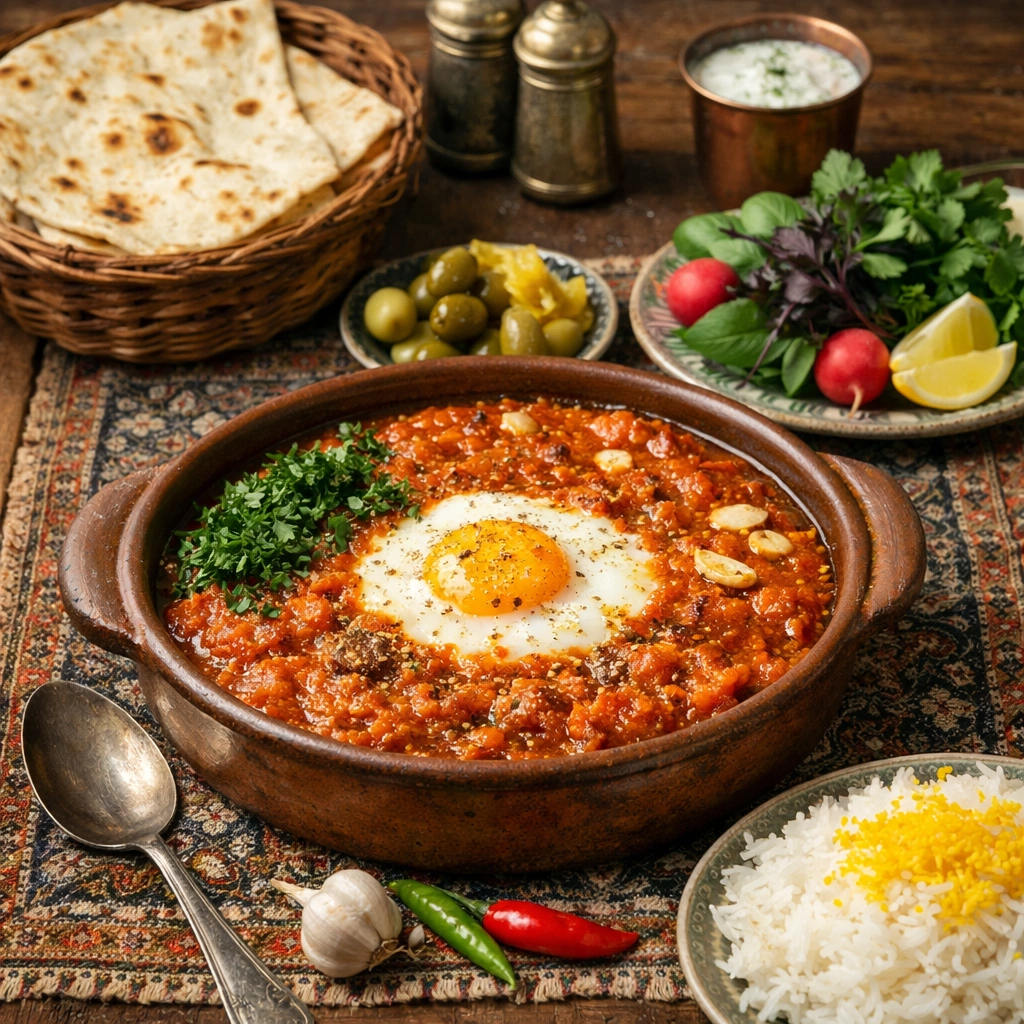

If you think eggplant is just a boring, mushy vegetable, you have been eating it wrong your entire life. Most people ruin this dish by not burning the skin until it looks like coal, which is the only way to get that deep, smoky soul.
You have to literally char the life out of the eggplant over an open flame or it is just a plain vegetable dip. It is the smokiness that separates the legends from the amateurs in Northern Iran.
History of Mirza Ghasemi:
This dish actually started with a guy named Mohammad Qasim Khan, who was the governor of Rasht back in the 1850s. He was obsessed with cooking and basically invented this recipe while hanging out in the Gilan province.
He eventually brought it back to the capital, and it became so popular that they named it after him. It is pretty rare for a politician to be remembered for a breakfast dish rather than their laws, but here we are.
The people of Northern Iran are super proud of it because it represents the humid, green vibe of the Caspian Sea coast. It is rustic, messy, and proof that some of the best food comes from a governor’s kitchen experiment.
What’s Inside?
The star is the charred eggplant, which has to be peeled after it is burnt to get that campfire taste. You then mash it up with a ridiculous amount of fresh garlic and juicy, ripe tomatoes.
The secret weapon is the turmeric, which gives it that warm glow and earthy base. Then you crack a few eggs right into the pan at the end to pull everything together into a thick, chunky sauce.
It is not fancy or complicated, but the way the garlic hits the smoke is a total game-changer. You really only need a handful of items from the pantry to make something that tastes this complex.
How Persians actually eat?
In the north of Iran, people actually eat this for breakfast with a side of fresh bread. But honestly, most of my friends just serve it as a starter or a light dinner with Saffron rice.
There is a big debate about the eggs; some people like them scrambled in, while others want them sitting on top. The real pros use a piece of Sangak bread to scoop up every single bit of the garlic oil.
If you are eating it in Gilan, expect it to be way more garlicky than you think is socially acceptable. It is supposed to be bold, loud, and leave you smelling like a kitchen for a few days.