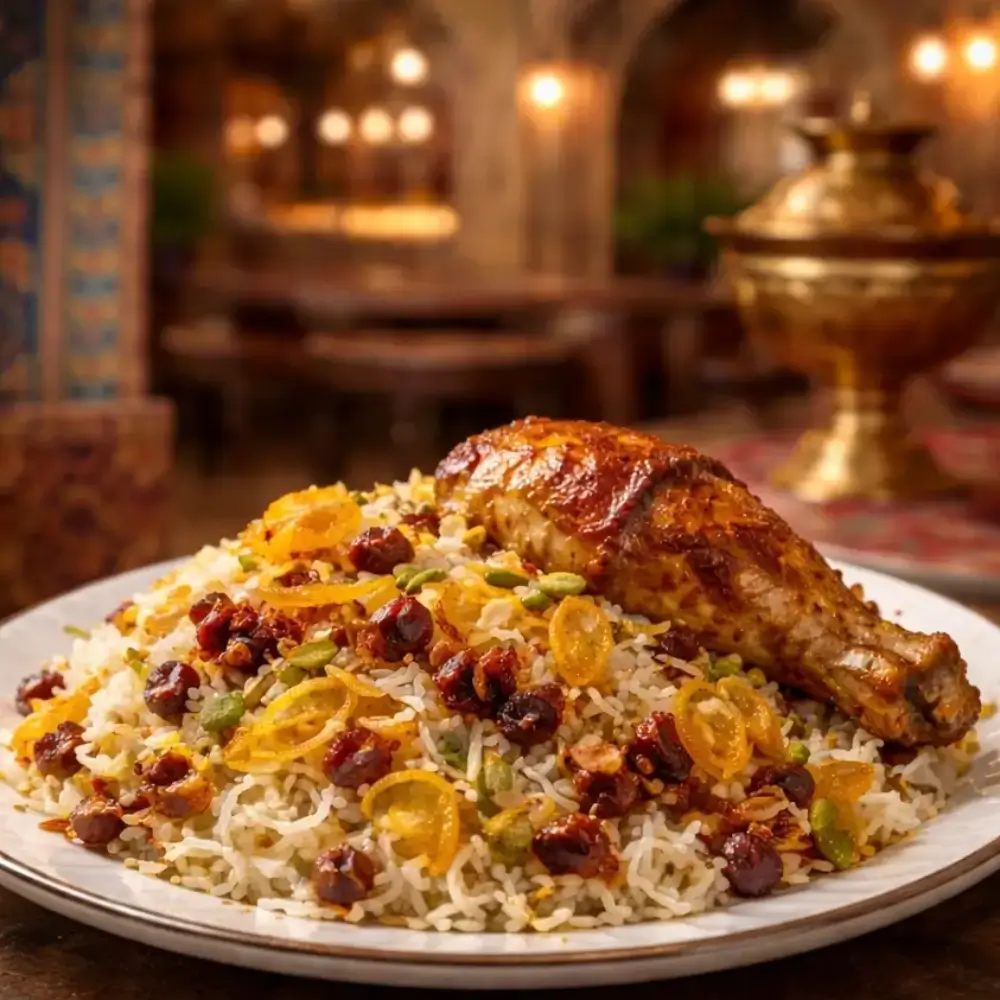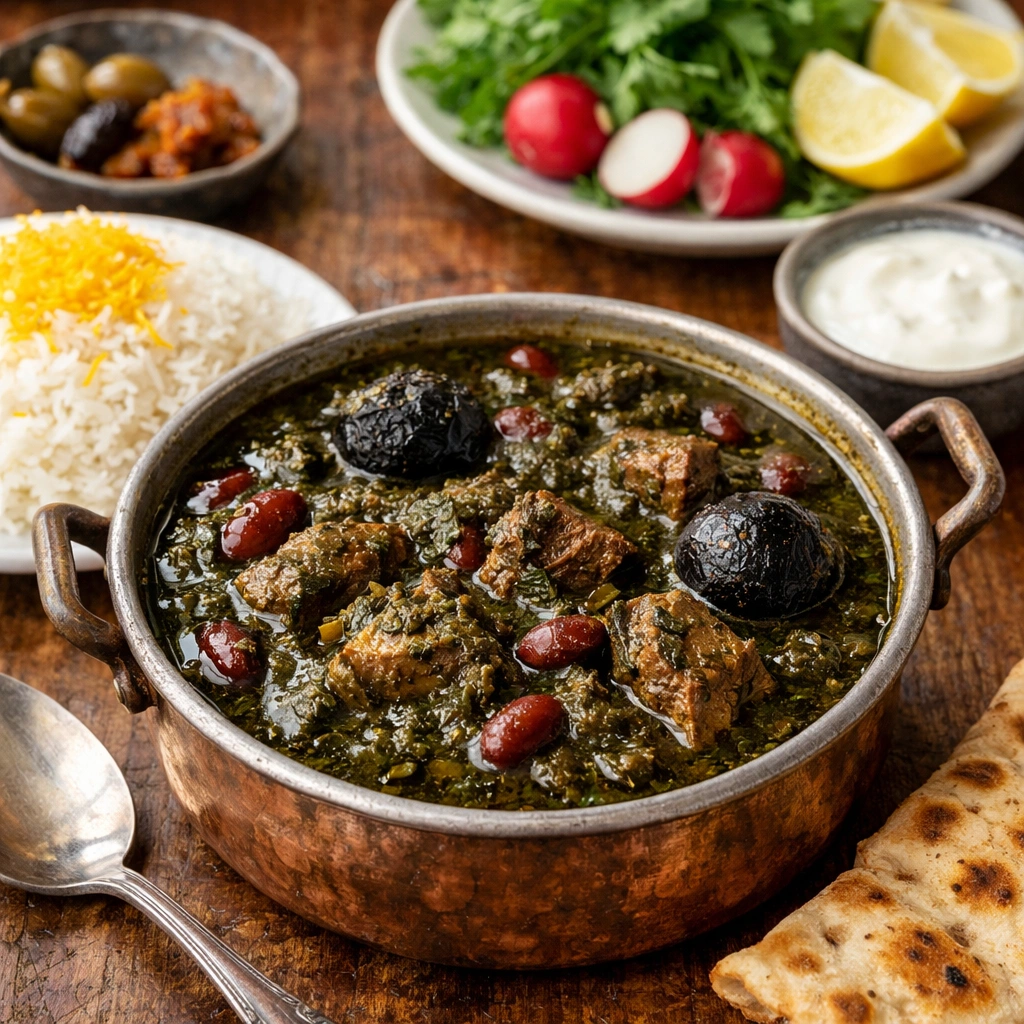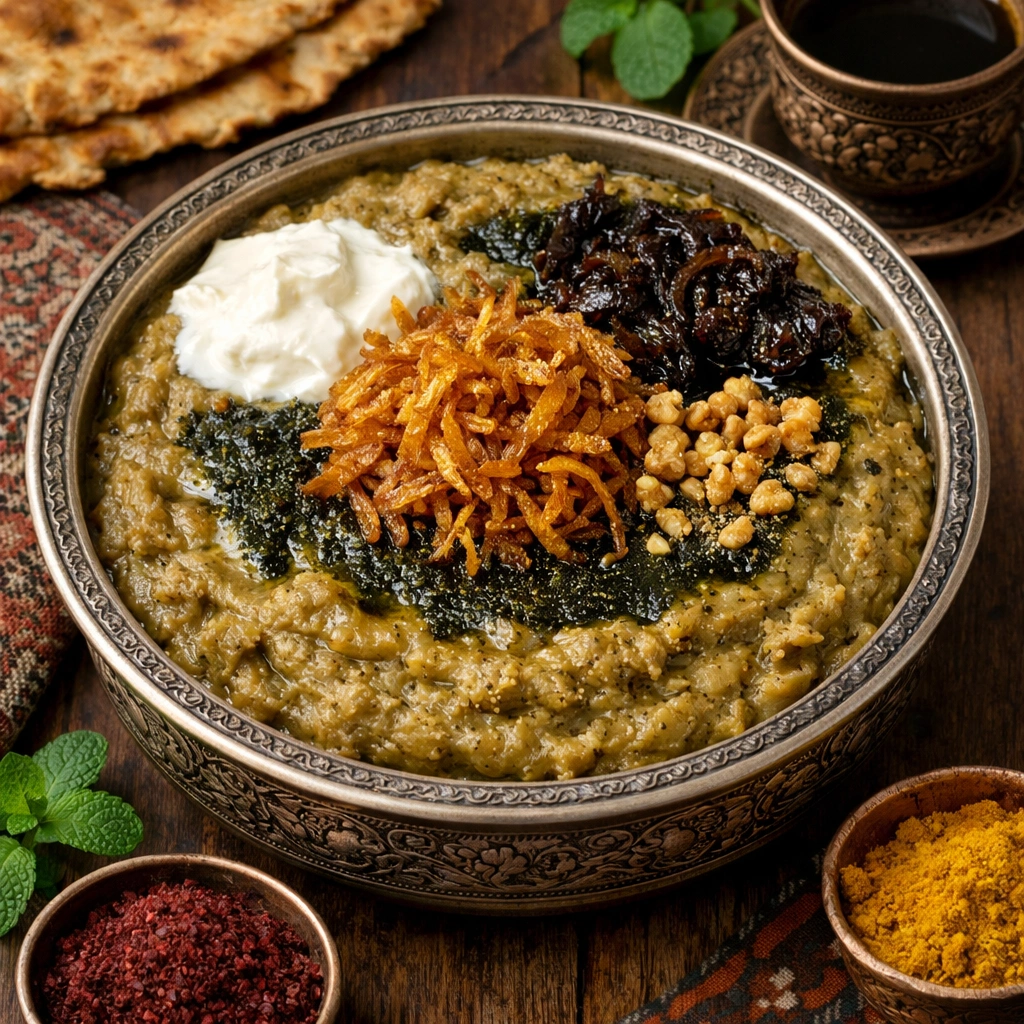
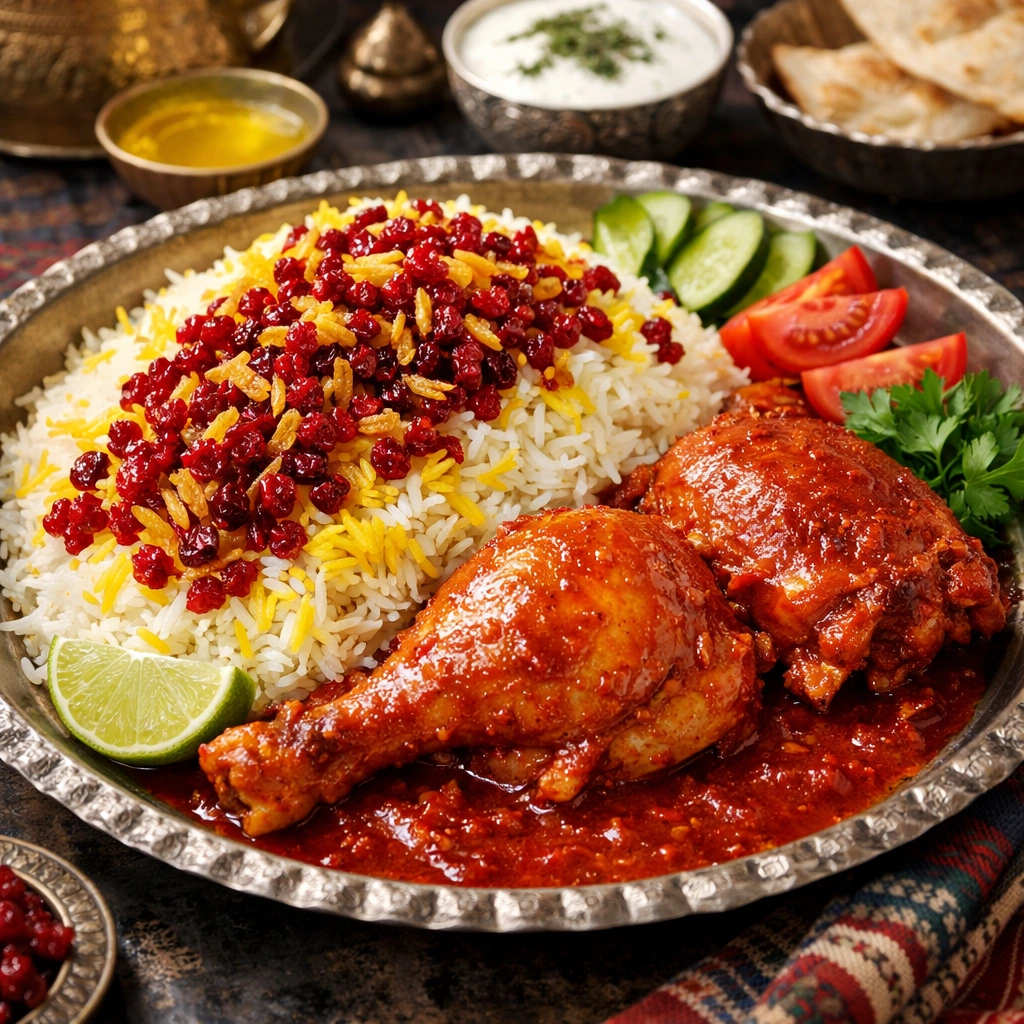

If you think Persian food is all about kebabs, you are seriously missing out on the real soul of the kitchen. Most people focus on the meat skewers, but the real magic happens in the rice dishes that take hours to get just right.
History of Zereshk Polo ba Morgh
Back in the day, the Persian kings were obsessed with hunting and grand feasts, but this dish wasn’t always for royalty. It actually started as a way to celebrate the harvest of barberries, those tiny red jewels that grow all over Eastern Iran.
The name literally translates to barberry rice with chicken, and it became a staple at weddings and big family gatherings. It’s the ultimate “welcome home” meal that grandmas across Iran make when they want to show some serious love.
The dish evolved from basic village food into a masterpiece of color and contrast that defines Persian hospitality. It is not just a meal; it’s a symbol of celebration that has been served on Persian tables for centuries.
What’s Inside?
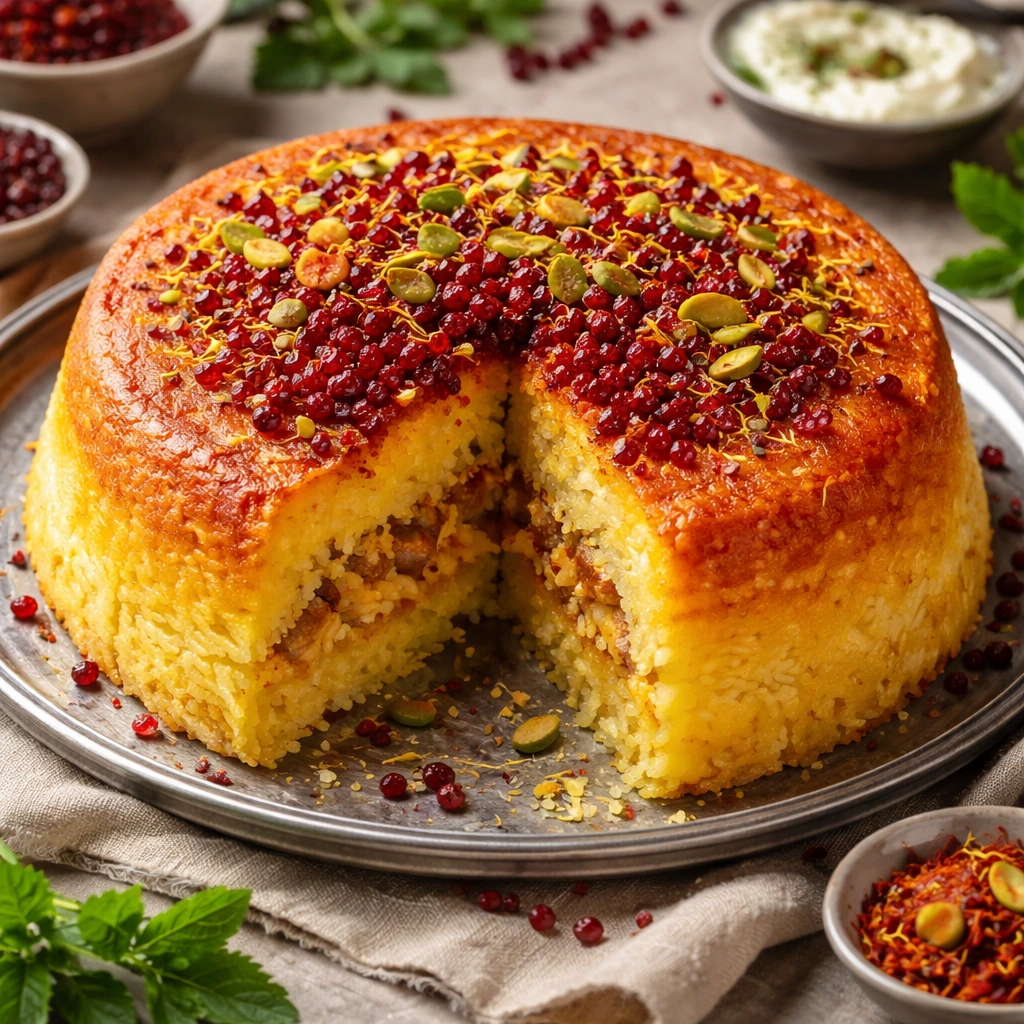
The absolute star of the show is the Zereshk, which are dried barberries that have a sharp, sour kick. You sauté them with a bit of butter and sugar so they glisten like rubies on top of the plate.
You cannot have this dish without high-quality Saffron, which gives the rice that iconic yellow glow and a floral scent. We use the Saffron to bloom the rice and to marinate the chicken, making everything smell like a dream.
The chicken is usually slow-cooked in a thick tomato and turmeric sauce until it’s so tender it just falls apart. The balance of the sour berries against the savory meat and the aromatic rice is what makes this meal so addictive.
How Locals actually eat?
In a real Persian home, the first thing everyone fights over is the Tahdig, which is the crispy, buttery layer of rice at the bottom of the pot. If you don’t get a piece of that golden crunch, did you even eat?
Locals never just eat the rice and chicken alone; you need a side of Mast-o-Khiar, which is a cool yogurt and cucumber dip. It helps cut through the richness of the butter and the acidity of the barberries.
You’ll usually see people eating this with a huge plate of Sabzi Khordan, which is just a bunch of fresh herbs like mint and basil. It’s all about the mess of flavors and textures, mixing a bit of everything into every single bite.