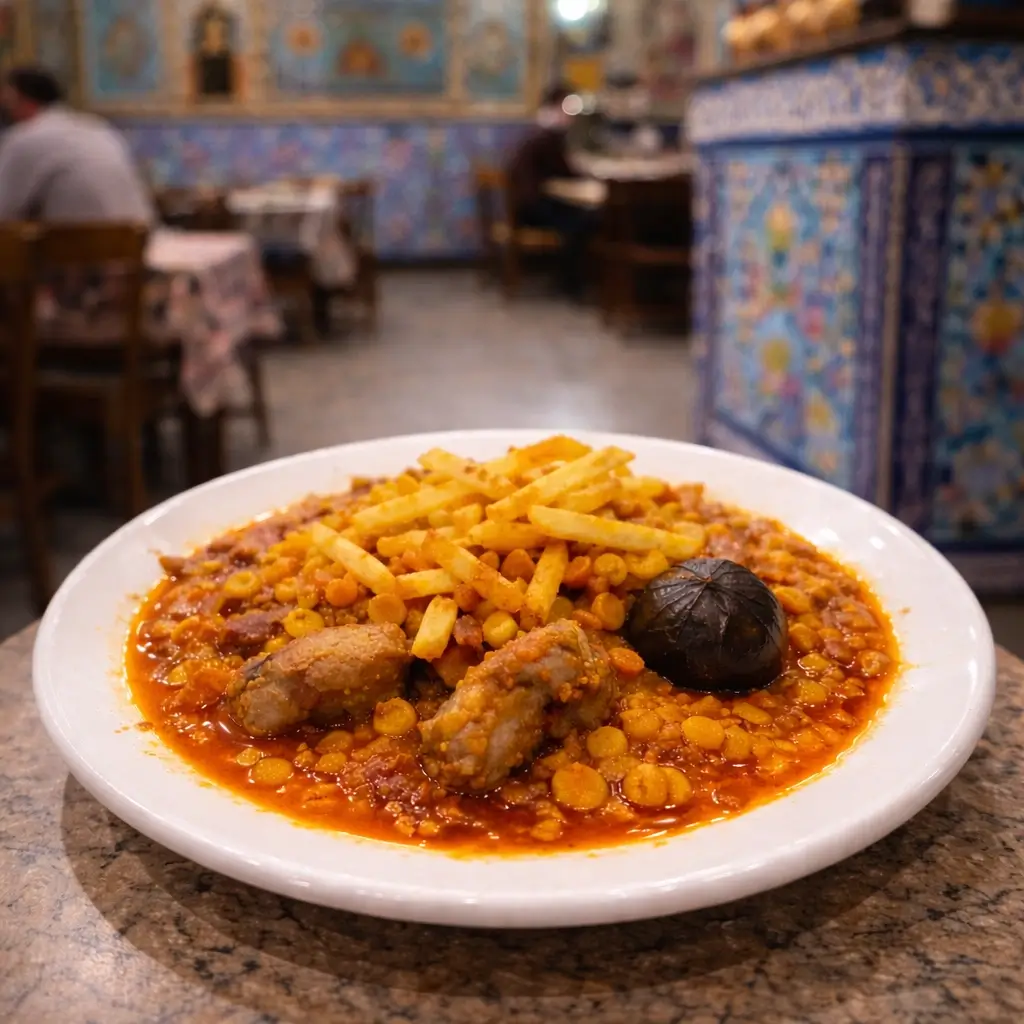

The British didn’t invent the concept of fries, and neither did the Belgians; the ancient Persians were actually frying up thin potato-like roots and meat stews long before the West caught on. I honestly believe that if you haven’t had a stew topped with crispy potatoes, you haven’t lived your best life yet.
Gheimeh is the ultimate comfort food that makes you feel like you’re getting a warm hug from a Persian grandmother. It’s not just a meal; it’s a bowl of pure tradition that has survived for centuries without needing a fancy makeover.
History of Gheimeh:
The word Gheimeh literally translates to meat that is cut into tiny pieces, which was a genius way to make expensive protein stretch further back in the day. It actually started as a humble dish served during massive religious festivals and street gatherings in old Safavid-era Iran.
Because it was cooked in giant copper pots over open fires to feed hundreds of people, it earned a reputation as the soul of community eating. It eventually moved from the dusty streets into the heart of every Persian home, becoming the go-to Friday lunch for families.
Even though it’s been around for hundreds of years, the recipe hasn’t changed much because you just don’t mess with perfection. It’s a dish that carries the weight of Persian history in every single spoonful of that thick, tomato-based gravy.
What’s Inside?
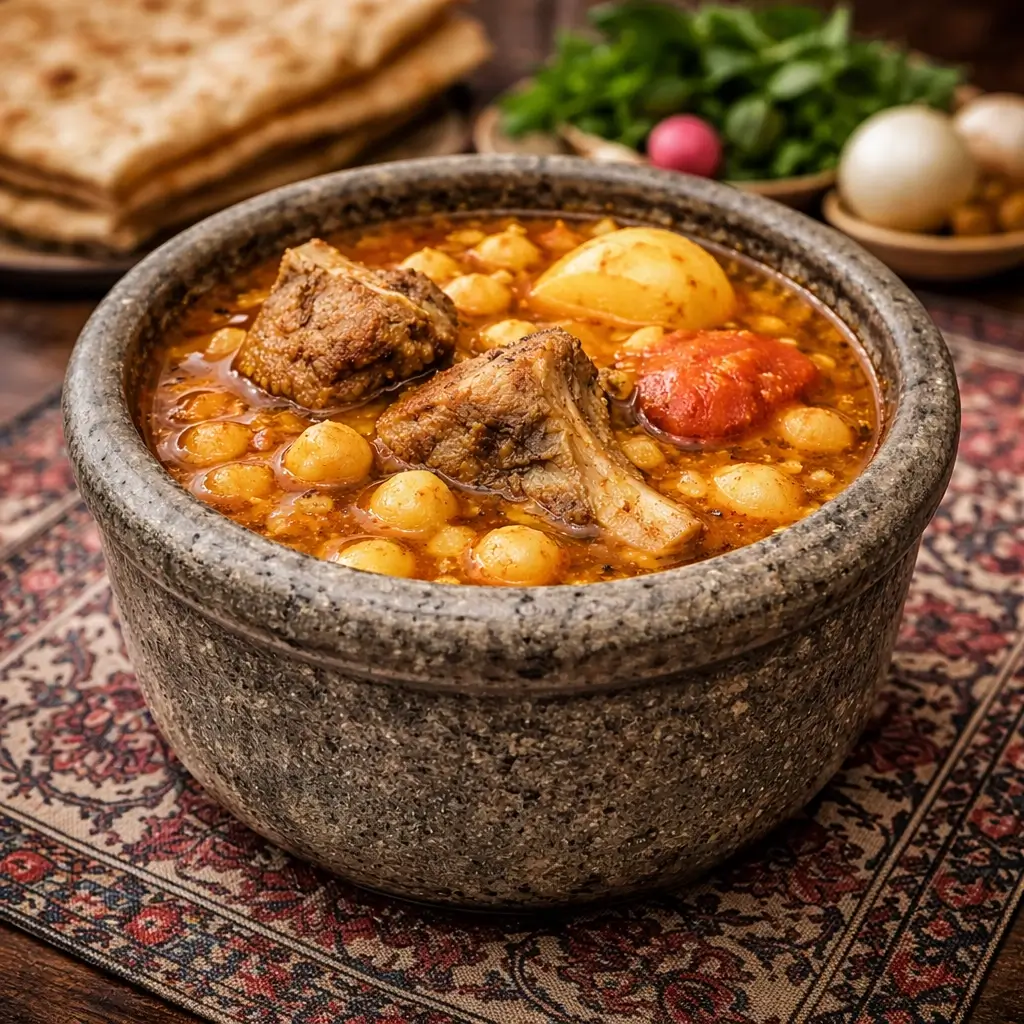
The real magic happens with the dried limes, known as Limoo Omani, which give the stew a sour, funky kick that you can’t get from fresh citrus. You also have split chickpeas that have been simmered until they are soft but still have a bit of a bite to them.
Yellow split peas are the backbone here, soaking up all the juices from the diced lamb or beef while everything bubbles away. Then there is the saffron, which is the most expensive spice on the planet, but Persians use it like it’s salt because it adds that golden glow.
Of course, we can’t forget the cinnamon and rosewater that hide in the background, making the whole kitchen smell like a dream. The final touch is always the mountain of thin, crunchy French fries piled right on top just before serving.
How Iranians actually eat?
You never, ever stir the fries into the stew; that is a rookie mistake that will turn your crispy potatoes into a soggy mess. The goal is to scoop up a bit of the crunchy topping with every bite of the soft meat and rice to get that perfect texture.
Locals always serve this over a bed of fluffy, long-grain basmati rice that has a buttery crust at the bottom called Tahdig. If you are lucky enough to get a piece of that crunchy rice, you use it as a literal shovel for the stew.
It is also pretty common to eat this with a side of Shirazi salad, which is just chopped cucumbers, tomatoes, and onions. The cold, crunchy veggies help cut through the richness of the warm stew and keep you reaching for more.