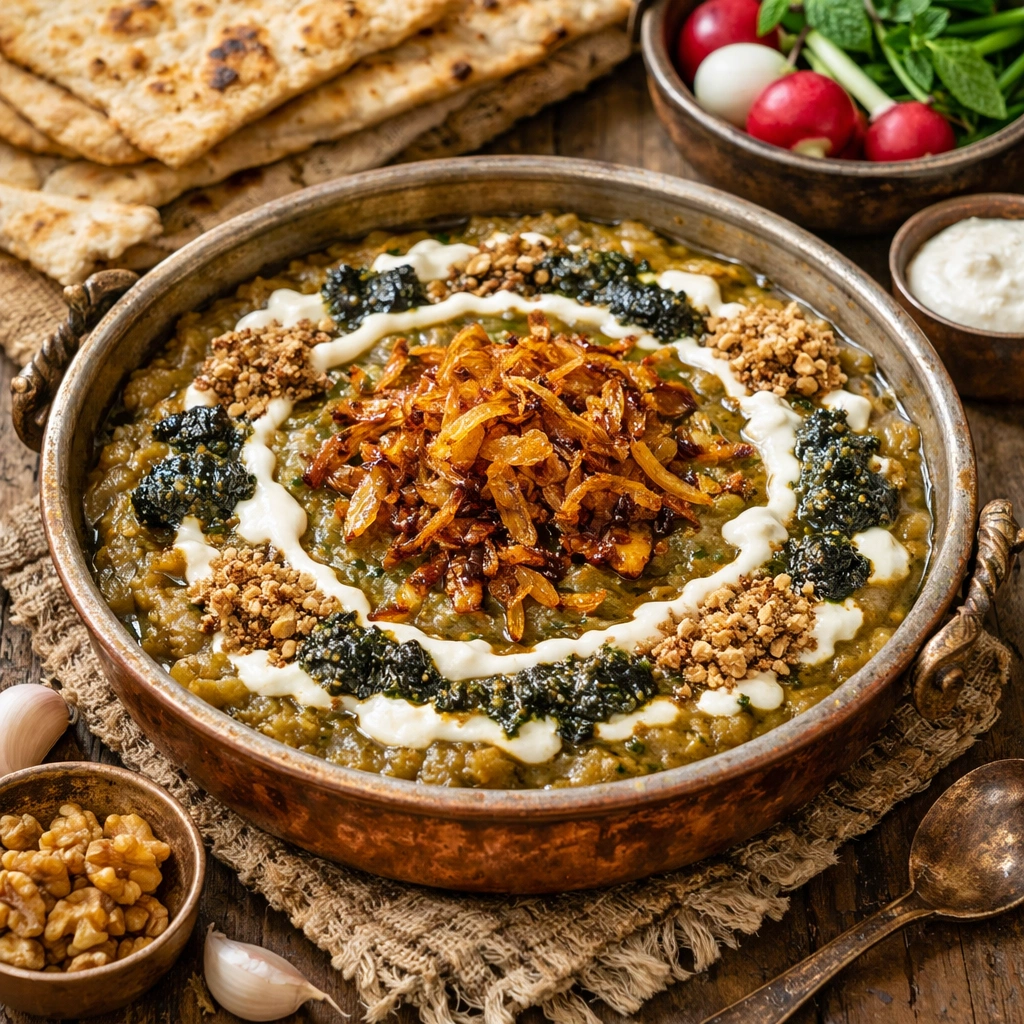

The weirdest thing about Kashk-e Bademjan is that it basically looks like a gray, lumpy mess, but it tastes better than any five-star meal you have ever had. Most people are totally grossed out the first time they see it because let’s be honest, it is not winning any beauty pageants.
But if you judge this dish by its looks, you are making a massive mistake and missing out on the best dip on the planet. I would honestly pick a bowl of this over a fancy steak any day of the week because the flavor is just that intense.
The secret is the kashk, which is essentially fermented yogurt whey that smells a bit like old socks but tastes like salty, tangy heaven. It gives the dish a funk that you just cannot find in any other cuisine, and it’s what makes it so addictive.
History of Kashk-e Bademjan:
Ancient Persians were actually genius when it came to preserving food, and that is exactly how kashk was invented thousands of years ago. They needed a way to keep dairy from spoiling in the heat, so they dried it out into hard salty stones.
Eventually, someone had the brilliant idea to rehydrate those stones and mix them with fried eggplant, which was everywhere in Iran. This dish started as a simple way for villagers to stay full using cheap ingredients they had lying around.
Over time, it moved from humble farmhouses into the royal kitchens of the Qajar dynasty because the kings couldn’t get enough of it. It is one of those rare recipes that has stayed exactly the same for centuries because you just cannot mess with perfection.
What’s Inside?
The soul of this dish is the eggplant, or bademjan, which has to be fried until it is super soft and oily. You want it to basically melt into a jam-like texture so it can soak up all the other flavors in the pan.
Then you have the kashk, which provides that signature sour punch that hits the back of your throat. It is the ingredient that makes people go “what is that?” because it is so unique and salty.
The magic finishes with sizzling garlic, fried onions, and a massive amount of dried mint that has been bloomed in hot oil. That mint oil, or nana dagh, is what cuts through the richness and makes the whole kitchen smell incredible.
How Iranians actually eat?
In Iran, nobody eats this with a fork or a spoon because that would just feel wrong and totally ruin the experience. You have to use your hands and tear off a piece of warm sangak or lavash bread to scoop it up.
It is almost always served as an appetizer, but honestly, most families just end up eating so much of it that they skip the main course. It is the ultimate comfort food that shows up at every single party or casual get-together.
The real pros make sure to get a bit of everything in one scoop, especially the extra fried onions and walnuts on top. If there is no crispy garnish left on the plate, you are definitely doing it right.