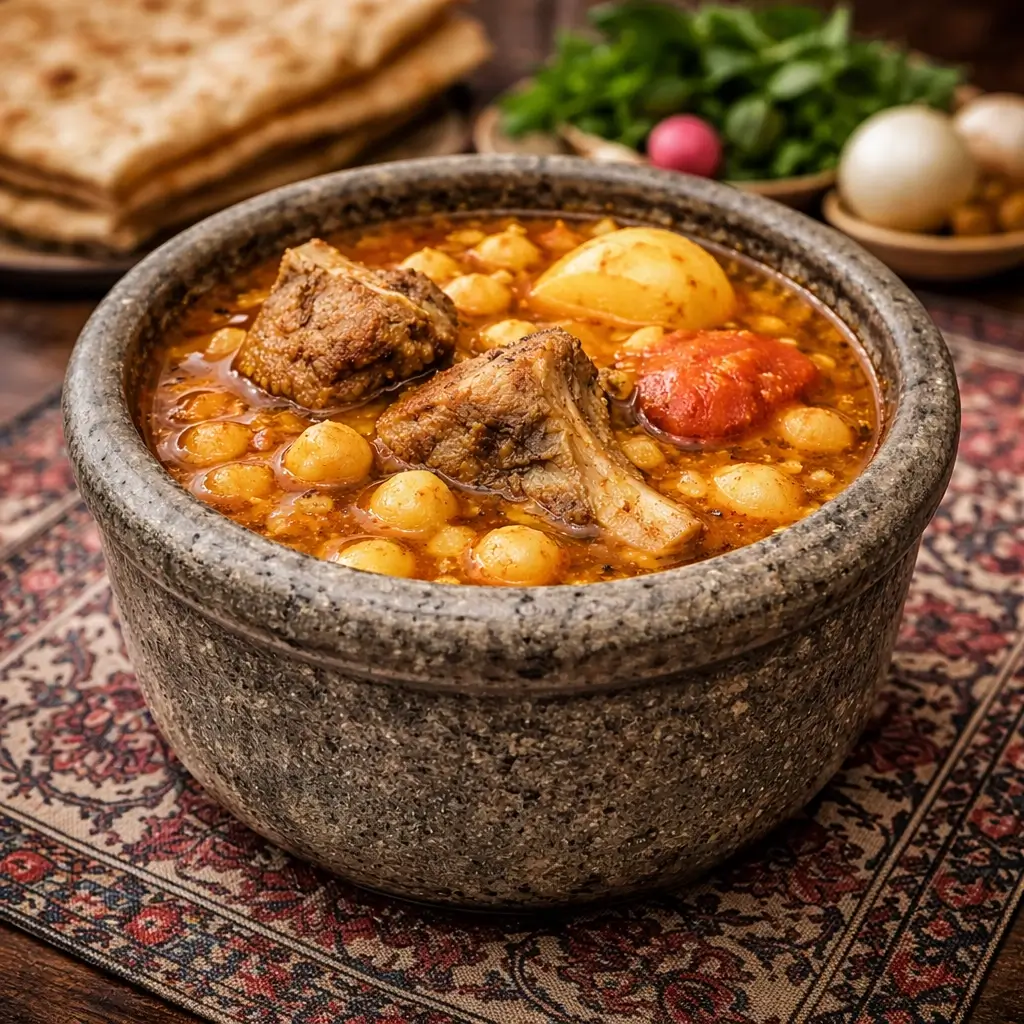

You are essentially eating a dish that was designed to be a poor man’s survival kit, but somehow it became the most respected comfort food in Iran. Most people struggle with the idea that you have to smash your own dinner into a paste, but if you don’t use the mallet, you aren’t actually eating Dizi.
The weirdest thing about this meal is that back in the 1300s, people didn’t even use tomatoes because they didn’t have them yet. It started as a simple way for workers to throw cheap cuts of lamb and beans into a clay pot and leave them in the coals of a public bathhouse to cook all day.
History of Abgoosht:
The name literally means meat water, which sounds pretty basic, but the history is anything but simple. It’s been the fuel for the working class in Iran for centuries, specifically the bazaar merchants who needed something heavy to keep them going.
The clay pot it’s cooked in is called a Dizi, which is why the names are used interchangeably today. It survived through several dynasties because it’s cheap, filling, and impossible to mess up if you have enough time to let it simmer.
Back in the day, the local baker would often take everyone’s individual pots and tuck them into the corner of his oven. This communal way of cooking turned a simple lamb stew into a social ritual that defined Persian hospitality.
What’s Inside?
The soul of this dish is definitely the fatty chunks of lamb and the chickpeas. You also have white beans and onions in the mix, but the real secret weapon that gives it that tangy kick is the dried lime, also known as Limoo Amani.
Turmeric is what gives the broth that deep yellow-orange glow, and nowadays, everyone uses a bit of tomato paste to thicken things up. You also can’t forget the potatoes, which soak up all the fat from the lamb and turn into little flavor bombs.
Everything is seasoned with simple salt and black pepper, but the magic happens when the fat from the meat melts into the water. It creates a rich, heavy broth that feels like a warm hug for your stomach.
How Iranians actually eat?
Eating this is a two-step process and if you do it wrong, the locals will definitely give you a funny look. First, you pour the broth into a bowl, tear up pieces of Sangak bread, and let them soak it all up like a sponge.
Once you’ve finished the liquid part, it’s time for the hard work. You take a heavy metal or stone mallet and mash the remaining meat, beans, and potatoes into a thick, smooth paste called Gusht-e Koobideh.
You eat that mash with more bread, some raw onions, and a side of fresh herbs like mint and basil. Most people wash it all down with Doogh, which is a salty yogurt drink that helps you digest the massive amount of protein you just inhaled.