
Most people who claim to love Persian food are actually terrified of Khoresht-e Karafs because they think celery belongs in a sad salad or a green juice. If you are one of those people who thinks cooked celery is mushy and gross, you have been lied to your entire life by bad school lunches.
The truth is that the Ancient Persians were obsessed with the medicinal power of celery long before it became a fitness trend, using it to cure everything from nerves to aches. They realized that if you fry the life out of it and simmer it with meat, it transforms into something that tastes nothing like a vegetable.
History of Khoresht-e Karafs:
This stew didn’t just appear out of nowhere; it is the younger, slightly more rebellious sibling of the famous Ghormeh Sabzi. It was born in the busy kitchens of Iran as a way to use the seasonal crunch of wild celery that grew across the plateaus.
While its older sibling gets all the fame, Karafs was the dish that separated the real home cooks from the amateurs. It became a staple because it was cheaper than herbs but, when cooked right, it tasted like absolute royalty to anyone lucky enough to get a bowl.
What’s Inside?
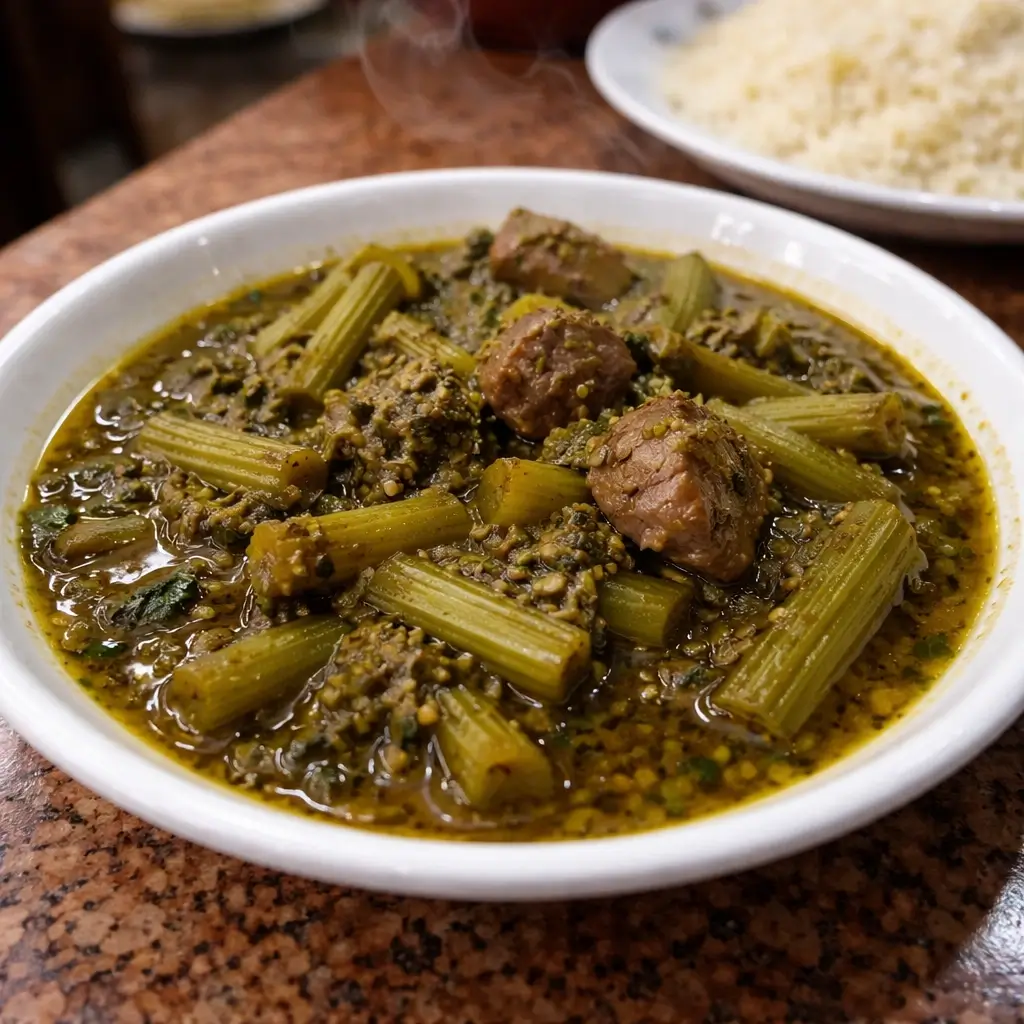
The soul of this dish is the stalks of Celery, but they aren’t alone; you have to chop them small and sauté them until they lose that raw “watery” vibe. Then you throw in a massive amount of Mint and Parsley to give it that deep, dark green color that looks almost like forest floor.
The real magic trick is the Limes, specifically the dried ones or a heavy splash of Lemon Juice. This gives it a sharp, sour kick that cuts right through the richness of the Beef or Lamb. Without that punchy acidity, it’s just a vegetable soup, and we aren’t here for soup.
How Iranians actually eat?
You never eat this out of a bowl like a lonely stew; it is always served over a massive mountain of fluffy Basmati Rice with a crispy Tahdig on the side. The goal is to let the green sauce soak into the white rice until every single grain is stained and flavorful.
Locals will judge you if your stew is too watery, so it needs to be thick and “settled” before it hits the table. Most families serve it with a side of Shirazi Salad or a big dollop of thick Yogurt to balance out the herbal intensity of the green sauce.