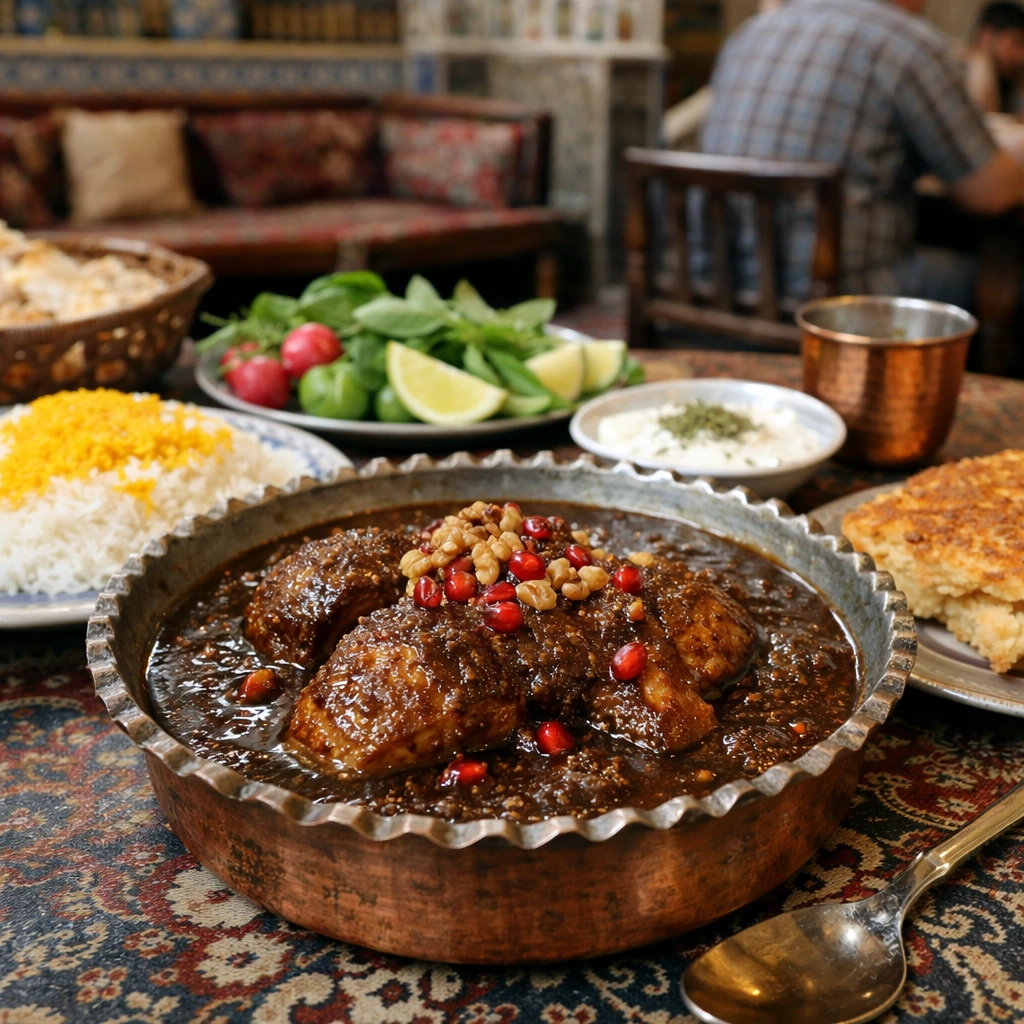

Fesenjan is honestly the most confusing looking dish you will ever see because it looks like a bowl of dark mud. I used to think it was a massive culinary prank until I actually took a bite and realized it is the king of Persian stews.
Most people get weirded out by the color, but the deep brown hue is just proof that the ingredients have been simmering for hours. If it looks bright or light, someone definitely messed up the recipe and skipped the patience part.
History of Fesenjan:
Back in the day, specifically around the Sassanid Empire era, this dish was the ultimate flex for the royal elite. It started in the Gilan province where the weather is rainy and the walnuts grow like crazy.
The locals found a way to take pomegranates and nuts and turn them into something that tastes like pure wealth. It’s been served at weddings and massive family parties for centuries because it shows you really care about your guests.
Archaeologists even found remnants of the ingredients in the ruins of Persepolis, so you are basically eating edible history. It’s stayed popular because once you try it, you can’t really go back to basic stews.
What’s Inside?
The magic happens when you grind up a mountain of walnuts until they release all their natural oils. You then mix that with a heavy dose of pomegranate molasses which gives it that signature tangy and sweet kick.
Usually, you’ll find duck or chicken tucked inside the sauce, soaking up all that richness until the meat just falls apart. Some people add a pinch of cinnamon or even a little sugar if they want it extra sweet.
It’s all about the balance between the earthy nuts and the sharp fruit juice. If you don’t have good quality pomegranate syrup, don’t even bother starting the pot because that is the soul of the whole thing.
How Persians actually eat?
You never eat this stuff alone; it has to be served over a massive plate of fluffy saffron rice. The rice usually has a crispy bottom layer called tahdig, which is the part everyone fights over at the table.
Locals don’t just dump the stew everywhere; they take a little bit of the sauce and mix it into the rice piece by piece. It’s a slow meal meant for long conversations and a lot of tea afterwards.
Also, don’t be surprised if it tastes even better the next day. The flavors settle and get way more intense after sitting in the fridge, making it the best leftover meal in existence.