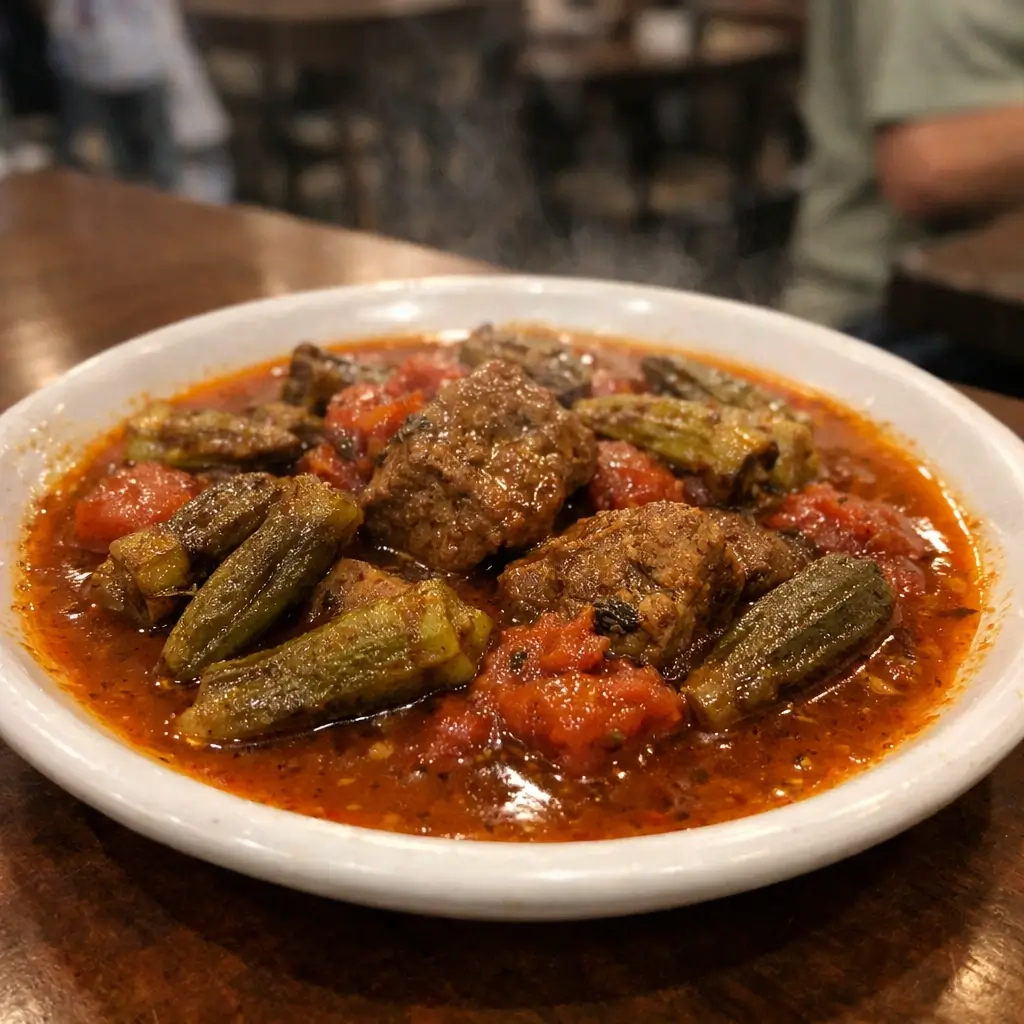

Most people think okra is just a slimy mess that ruins every plate it touches, but Persians figured out how to make it the star of the show. If your okra is gooey, you are doing it wrong, and you have probably offended a whole lineage of home cooks.
The real secret isn’t some fancy technique; it’s just about not over-handling the pods while they simmer in that thick tomato base. I used to hate this vegetable until I had it in a proper Persian home, where it was tender but still held its shape perfectly.
It is honestly the ultimate test of a cook’s patience because if you rush it, you end up with a bowl of green glue. Get it right, though, and it is easily the most comforting stew in the world.
History of Khoresht-e Bamieh:
This dish actually started in Southern Iran, specifically in places like Khuzestan where the weather gets incredibly hot. People there needed something hearty but tangy to get them through those brutal summer days.
It is heavily influenced by the flavors of the Persian Gulf, which is why it has a bit more of a kick than the stews you find in Tehran. The locals took a simple vegetable and turned it into a staple that eventually spread across the whole country.
Back in the day, it was a way to use seasonal okra and preserved tamarind or dried limes to keep things interesting. Now, it is just that nostalgic meal every Persian kid remembers their grandma making on a Friday afternoon.
What’s Inside?
The soul of this stew is the combination of lamb and baby okra, which have to be small and firm to work. You also need a massive amount of garlic and onions to build that savory foundation before adding the tomato paste.
The real magic comes from the souring agents, usually either dried limes known as limoo amani or a splash of fresh lime juice. Some families swear by adding a pinch of cinnamon or even some bloomed saffron to give it that classic Persian aroma.
You also can’t forget the turmeric, which gives the meat a deep color and earthy taste. Everything simmers together until the meat is falling apart and the sauce has thickened into a rich, red gravy.
How Iranians actually eat?
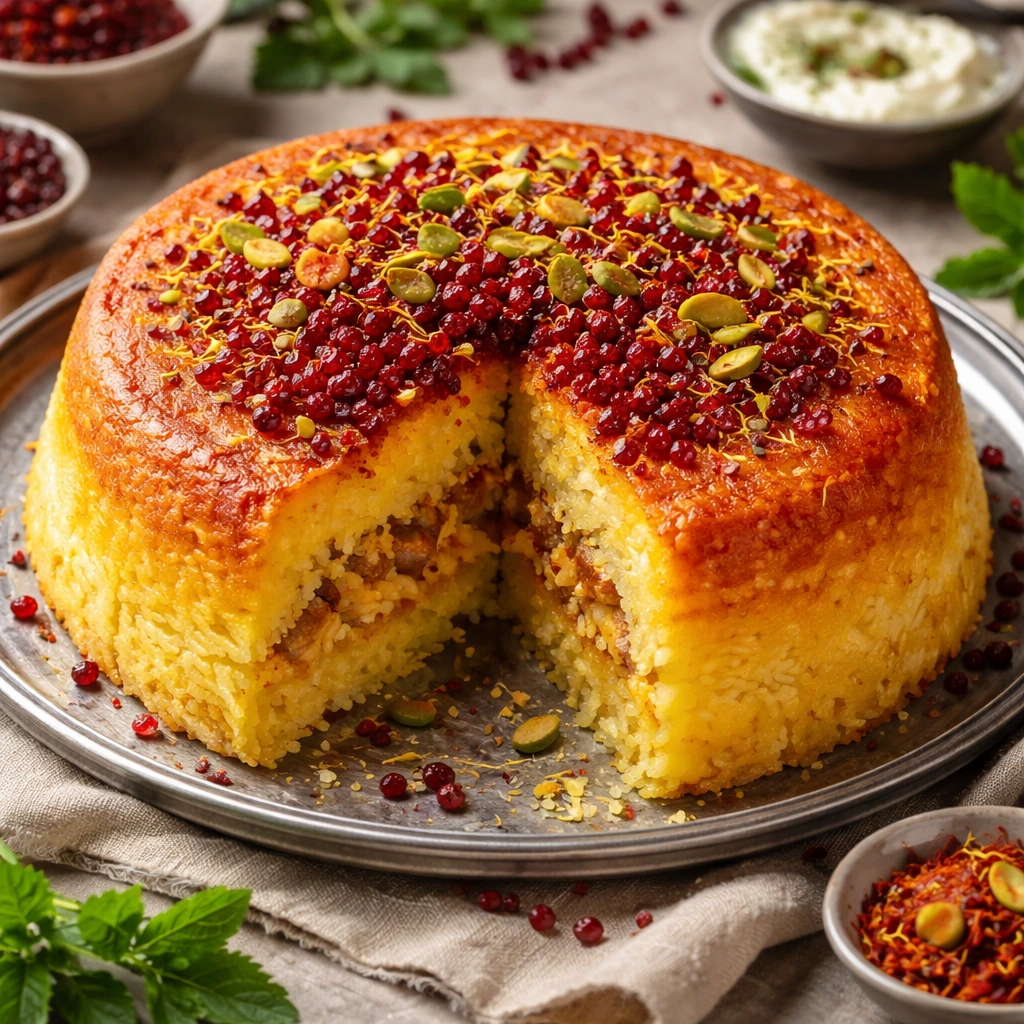
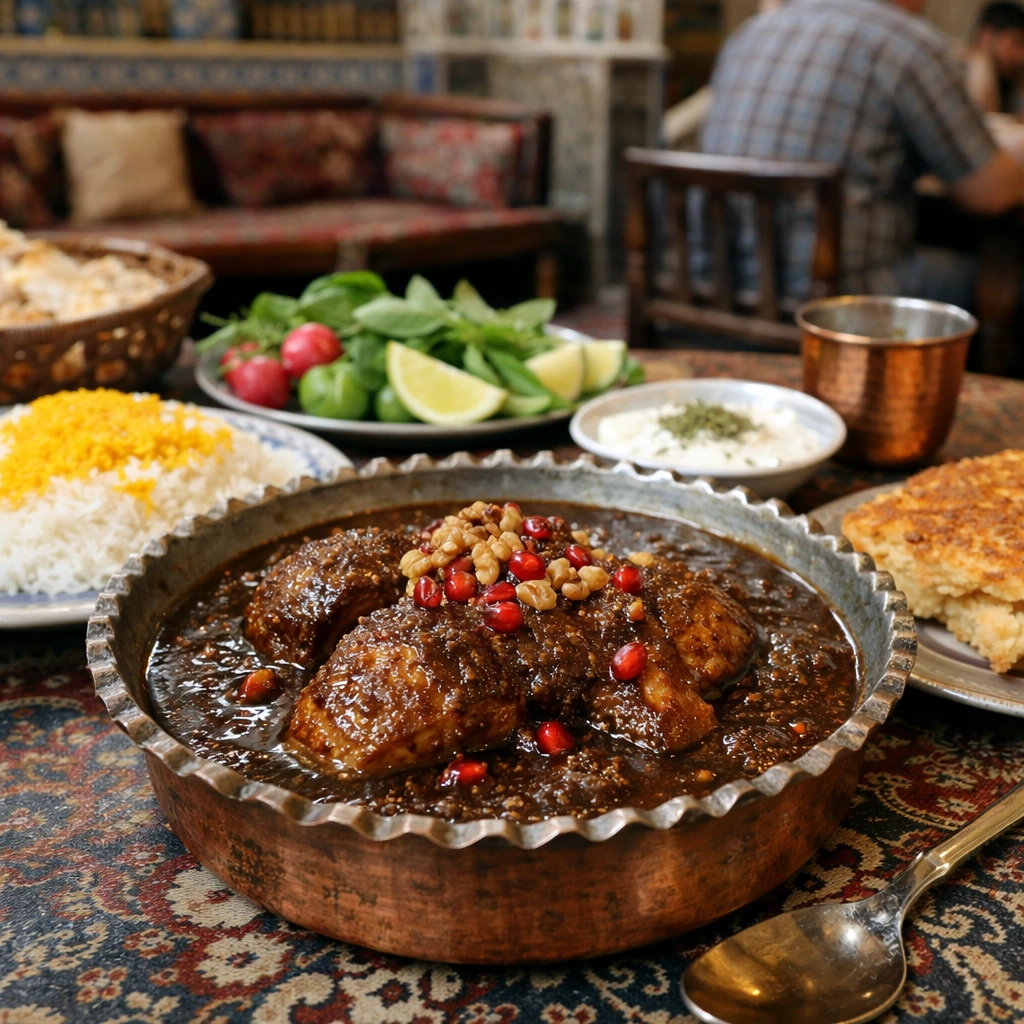
You never eat this stew alone; it has to be served over a mountain of fluffy, buttery basmati rice. The goal is to get a bit of the crunchy rice crust, called tahdig, and soak it in that sour tomato sauce.
Locals usually have a side of fresh herbs like mint and basil, or a bowl of salty pickled vegetables called torshi. It is all about balancing the heavy meat with something bright and crunchy to keep your palate awake.
Don’t even think about using a knife; if the lamb doesn’t flake apart with just a fork, the cook failed. It is a slow, messy, and totally satisfying meal that is meant to be shared with way too many people at once.