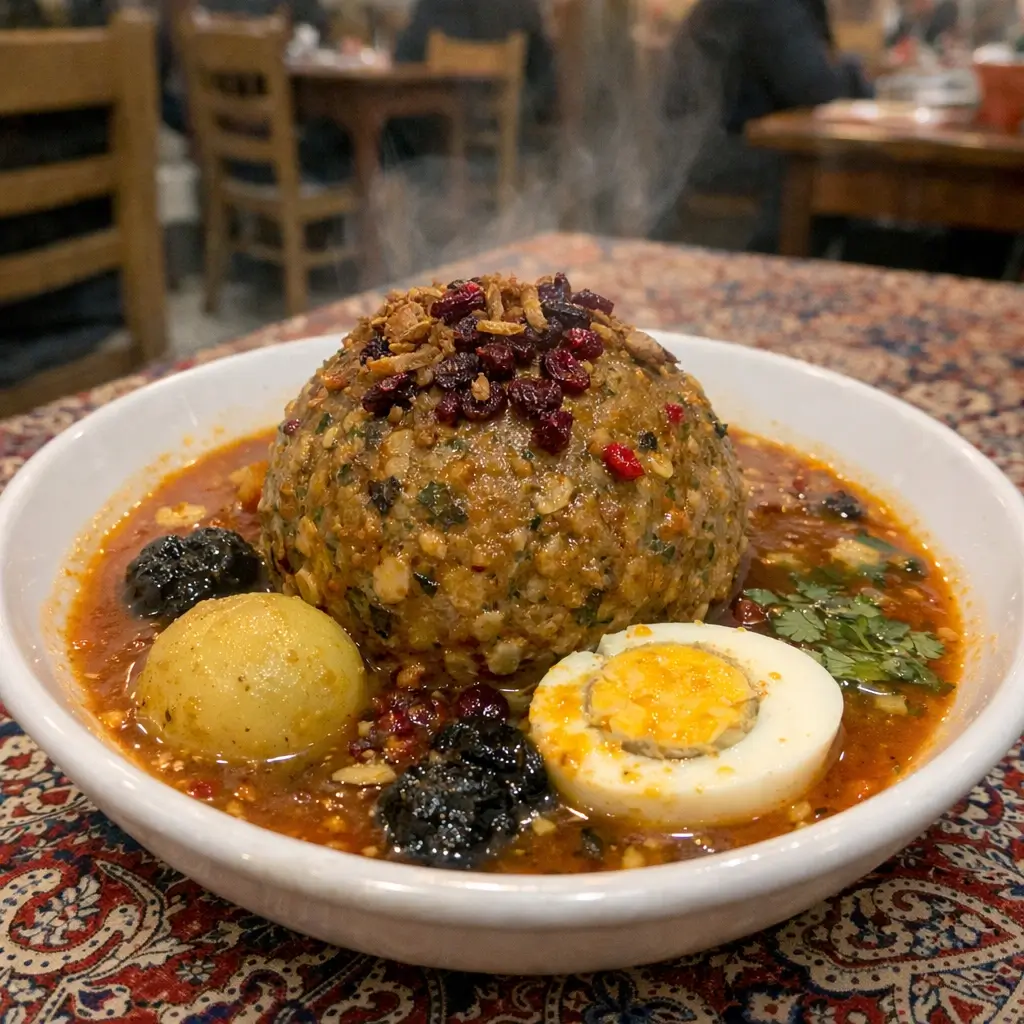

The idea that you need a degree in engineering to make Kofteh Tabrizi is a total myth, even if modern cooks act like it is a state secret. I honestly believe most people fail because they overthink the binder instead of just trusting the meat.
Historical records show that back in the day, these giant meatballs were often stuffed with a whole cooked chicken just to show off for guests. It was the ultimate flex of the Qajar era, proving that the host had both the money and the kitchen skills to go big.
History of Kofteh Tabrizi:
This dish comes from the city of Tabriz, and it started as a way for the elite to turn basic ingredients into a massive masterpiece. Long ago, the meat was hand-pounded in a stone mortar for hours until it became a sticky paste that wouldn’t fall apart.
Legend has it that if a bride-to-be couldn’t keep her Kofteh together in the pot, she wasn’t ready to get married. It sounds harsh, but it shows how much pride the people of Azerbaijan Province put into the structural integrity of their dinner.
The dish evolved from a simple meatball into a stuffed treasure chest, hiding surprises like nuts and fruit inside. It went from being a royal centerpiece to a weekend staple that brings families together around a massive, steaming pot.
What’s Inside?
The base is a mix of ground beef or lamb blended with yellow split peas and white rice, which gives it that heavy, satisfying chew. You have to use aromatic herbs like tarragon and savory to get that specific Persian soul into the mix.
The real magic is the surprise center where you’ll find a hard-boiled egg, walnuts, and dried plums or apricots. A splash of saffron in the tomato-based braising liquid turns everything a deep gold and makes the house smell like a dream.
Don’t forget the fried onions and barberries, which add a sharp kick to balance out all that heavy meat. Every bite is a weird but perfect mix of savory meat, crunchy nuts, and sweet fruit that somehow just works.
How Tabrizis actually eat?
You never just eat the meatball by itself like a giant burger; there is a specific ritual involving the broth. First, you ladle the soup into a bowl and tear up pieces of Sangak bread to soak up all that saffron-infused liquid.
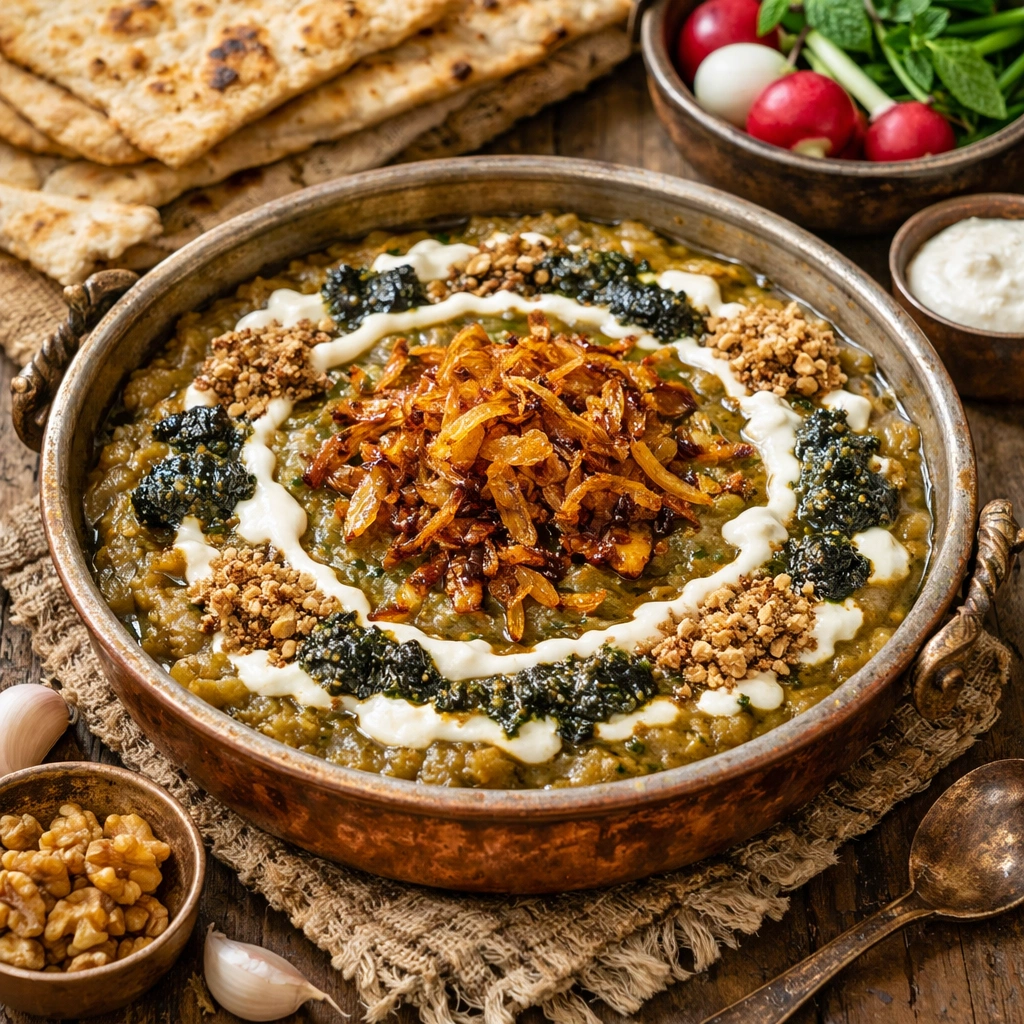
Once the bread is gone, you move on to the main event and start cutting into the Kofteh itself. It is usually served with a side of fresh herbs, crunchy radishes, and maybe some creamy yogurt to keep things from getting too heavy.
The locals will tell you that the leftovers are even better the next day when the flavors have finally settled. Just make sure you have a nap scheduled afterward because this meal is basically a delicious food coma in a bowl.